Anaerobic digestion
What Good Does Organic Waste Diversion Do
Recently Davidson Environmental took part in a green initiative expo. It is always a pleasure to meet people and explain what we do to help businesses achieve their green goals. At this particular expo the municipality was launching a green bin organics program and some of the residents were unaware of the benefits of running such a program. Their lack of awareness was expressed with a mixture of frustration, judgement, irritation, and curiosity. I thought this would be a great forum to highlight the facts and the basics of organic waste diversion.
Organic waste generally refers to biodegradable, compostable waste. Examples include food scraps, yard and garden trimmings, food-soiled paper products and biosolids.
As organic waste decomposes, it generates Methane a greenhouse gas which:
increases global warming and
contributes to climate change.
Methane is responsible for around 30% of the current rise in global temperature.
One third of all food produced in the world is lost or wasted every year
When food is lost or wasted so are the resources that are required to grow, manufacture and distribute it.
40% of material sent to landfills is comprised of organic waste (where organic waste diversion is not practiced)
“This equates to a global carbon footprint of approximately 4.4 billion tonnes of CO2annually “(Food and Agriculture Organization of the United Nations, 2015).
This constitutes half of the necessary carbon reduction needed to achieve the Paris Agreement goal of a 1.5oC temperature rise by 2050.
That is a lot of numbers and percentages, but those are the cold, hard facts.
But there is good – green news:
A single business’s actions in diverting organic waste or composting can make a significant impact towards sustainability of our planet. Here are some of the benefits gained:
Diverting organic waste extends the lifespan of landfills and reduces the environmental impact of waste disposal.
Two streams of organic waste diversion
Composting or
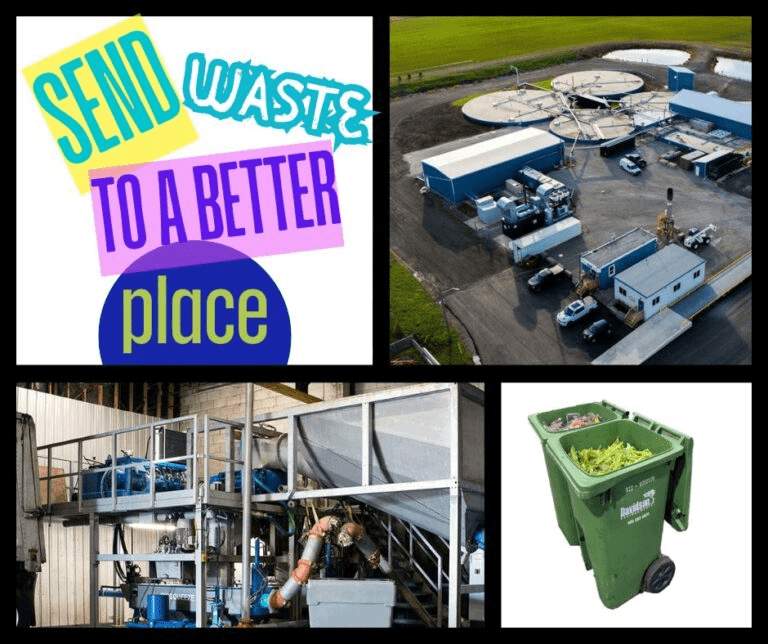
Anaerobic digestion (producing Bio-Gas leaving natural fertilizer as the byproduct of the process – a win win)
ENVIRONMENTAL BENEFITS OF COMPOSTING
Soil Improvement: Compost enriches soil, improves water retention, and enhances plant growth.
Water Conservation: Healthy soil, improved by compost, requires less irrigation, saving water.
Resource Recovery: Composting recovers nutrients from organic waste, providing a valuable resource for agriculture and horticulture.
Sustainability and Circular Economy: Composting promotes a more sustainable approach to waste management and supports the principles of a circular economy.
Increased Job Creation: Composting facilities and related industries create green jobs in sorting, processing, and selling compost.
ENVIRONMENTAL BENEFITS OF COLLECTION FOR ANAEROBIC DIGESTION
All of the benefits above plus…
Reduced Greenhouse Gas Emissions: Diverting organic waste from landfills reduces the release of methane into the environment.
The production of methane is contained and utilized as Biofuel (an equivalent to Natural Gas).
Organic fertilizer is a byproduct.
The p Reducing and managing food waste saves: the land, air, water, cost of waste disposal, our planet and its future.
To see how our business can help your business achieve green goals, contact us.